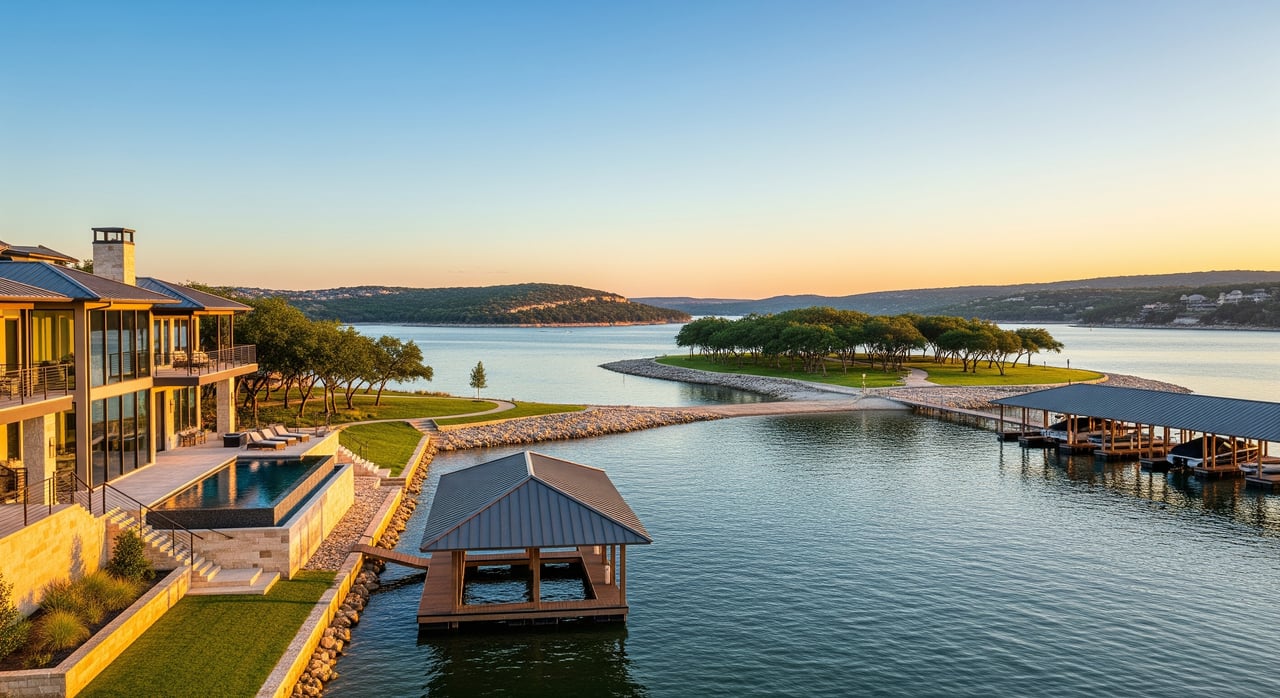
Picture this: you step out with coffee in hand, walk down to your boat, and push off onto Lake Travis within minutes. For many buyers in Lakeway, that image is the dream. The question is whether you need true waterfront to live it, or if a water-access community with a marina fits your lifestyle better. Both paths offer a lake life, but they come with different costs, responsibilities, and tradeoffs.
In this guide, you’ll compare true waterfront and water-access living in Lakeway so you can decide with confidence. You’ll learn how ownership costs stack up, how docks and permits work on Lake Travis, what to expect from HOAs and insurance, and how each option performs at resale. Let’s dive in.
Waterfront vs water-access explained
True waterfront means your lot touches Lake Travis. You may have or be able to build a private dock, and you’ll enjoy direct shoreline views. The upsides are privacy, immediacy, and the ability to launch from your property. The tradeoffs are higher purchase prices, higher assessed values and taxes, and more maintenance.
Water-access homes are not directly on the shore but belong to communities with a marina or shared docks, or they are near public ramps. You can often rent or be assigned a slip, or use day docks. The upsides are lower purchase prices for similar homes and fewer dock maintenance responsibilities. Tradeoffs include HOA rules, potential slip waitlists, and less control over operations.
Some neighborhoods offer hybrid options, such as a very short walk to the shore or a deeded but off-lot slip. These can strike a balance if you want views and convenience without full waterfront costs.
What it really costs to own
Purchase price and property taxes
- Waterfront lots in Lakeway are scarce, which drives a premium for land and improved properties. That premium flows into assessed value and annual taxes.
- Tax bills in Lakeway combine several entities, which can include the city, Travis County, Lake Travis ISD in many areas, and sometimes a MUD or special district. Always confirm the specific parcel’s tax rate and history with the appraisal district or your advisor as part of your affordability planning.
HOA and community fees
- Water-access communities, and many waterfront neighborhoods, have HOAs. Fees may support marina operations, dock upkeep, landscaping, security, and reserves.
- Costs vary widely. Some associations have modest annual dues for basic amenities. Others, especially resort-style communities with private marinas and pools, have higher monthly or annual fees. Request current budgets, reserve studies, and any recent or pending special assessments during due diligence.
Docks and maintenance budgets
- Building a new private dock can range from tens of thousands of dollars for small, simple builds to the high tens or low hundreds of thousands for larger custom docks with upgraded materials and utilities. Site conditions and Lake Travis design requirements influence pricing.
- Annual upkeep includes cleaning, hardware replacement, paint or stain, and minor repairs. Plan for periodic larger repairs, especially after storms or water-level swings.
- If you rely on a community marina, account for slip rental or assignment fees instead of private dock costs.
Utilities and systems
- Some lakeside parcels may use well and septic or be served by a MUD rather than city water and sewer. Confirm connections, capacity, and any impact fees when evaluating a property.
Long-term carrying costs
- Consider all recurring expenses together: taxes, HOA dues, insurance, dock or slip costs, and routine maintenance. Waterfront ownership almost always carries higher ongoing costs than water-access living.
Docks, permits, and shoreline rules on Lake Travis
Owning on Lake Travis means working within a clear regulatory framework. Understanding it early will save time and surprises.
Who regulates what
- The Lower Colorado River Authority (LCRA) manages Lake Travis and sets policies for private docks and structures that interact with the lake. Authorization is required for most private docks.
- The City of Lakeway has municipal codes and permitting processes. Travis County may also be involved depending on parcel location. Confirm jurisdiction before planning work.
- In specific circumstances, state or federal agencies such as Texas Parks and Wildlife, the Texas Commission on Environmental Quality, or the U.S. Army Corps of Engineers may have requirements, especially if wetlands or environmental impacts are involved.
Key issues to verify
- Authorization vs. ownership: Homeowners often do not own the lakebed below certain elevations. You typically need LCRA authorization or a lease for a dock. Your deed and recorded rights determine what is allowed.
- Permitting timeline: Plan for weeks to months for reviews, neighbor notifications, and design checks. If you intend to build or transfer dock authorization at closing, start early to avoid delays.
- Design standards: There are rules for dock size, materials, setbacks, lighting, and safety features. Lake level variability on Lake Travis means floating elements and supports must handle drawdowns and high-water events.
- Transfers and assignments: If a dock or slip is present, confirm whether the authorization or lease transfers with the sale or requires a new application. In communities, slip assignments are often controlled by HOA covenants.
Shoreline realities on Lake Travis
- Water levels fluctuate. A dock that functions at typical levels may be less usable during low water or vulnerable in high water. Choose designs and anchoring systems that fit a variable lake.
- Shoreline erosion, stabilization, and vegetation removal can be regulated. Preserving native vegetation supports bank stability and can protect long-term views and ecosystems.
- Check nearby boat traffic patterns and any no-wake zones. Congested channels can affect noise, privacy, and docking ease.
Insurance, flood, and liability
- Flood insurance: Whether it is required depends on FEMA flood zone designation and your lender. Many lakeshore properties sit in zones that carry elevated risk. Obtain a flood determination and quotes early in your process.
- Elevation certificates: Lenders may ask for one, and it can help insurers assess risk and price policies appropriately.
- Homeowner’s insurance: Waterfront homes often have higher premiums due to exposure to wind and water. If you have a private dock, confirm whether your policy covers dock damage and third-party injuries, or whether you need a marine or specialized liability policy.
- Dock liability: If someone is injured on your dock, you could be liable. Discuss coverage limits and exclusions with your insurance agent.
HOA rules and lifestyle tradeoffs
Access arrangements you may encounter
- Deeded private dock attached to the property.
- Assigned slip in a community marina managed by the HOA or a third-party operator.
- Shared community docks or day-use slips.
- No designated slips, with owners using nearby public ramps.
Common HOA restrictions
- Boat size and type limitations, guest policies, and marina operating rules.
- Architectural controls for docks and shore improvements.
- Rental rules, including short-term rental restrictions.
- Maintenance responsibilities and procedures for repairs or upgrades.
Day-to-day lifestyle differences
- Waterfront: Immediate access, the ability to fish off your dock, and private amenities like lifts and lighting. Expect more maintenance, potential noise from lake traffic, and higher carrying costs.
- Water-access: Lower carrying costs and shared responsibility for infrastructure. Many communities add social amenities like pools, clubhouses, or trails. The tradeoff is less control over marina operations and possible slip waitlists.
Operational risk to evaluate
- Community marinas can levy special assessments for repairs or upgrades. Review HOA meeting minutes, reserve studies, insurance, and any ongoing disputes or litigation before you buy.
Resale and long-term value
- Market premiums: Waterfront properties usually sell at a higher price per square foot compared with near-water but non-waterfront homes. The premium depends on view quality, dock status, shoreline dynamics, and community desirability.
- Buyer pool and seasonality: The buyer pool for true waterfront is narrower but motivated. Showing activity often peaks in spring and summer. Appraisal comps can be limited, and underwriting can be nuanced for properties with docks or flood risk.
- Appraisal considerations: Appraisers will evaluate lot quality, view permanence, dock condition, and any transferable slip or authorization rights. Unapproved or poorly maintained structures can reduce appraised value or complicate closing.
- Risk factors: Nontransferable dock rights, deferred dock maintenance, prior flood claims, HOA instability, shoreline erosion, or environmental issues can all weigh on resale.
Which fit is right for you?
Ask yourself these quick questions to narrow your fit.
- If instant, private access to your boat and uninterrupted shoreline views are nonnegotiable, you likely fit true waterfront. Budget for higher taxes, insurance, and ongoing maintenance.
- If you want the lake lifestyle at a lower upfront and monthly cost, and you are comfortable with HOA rules and shared marina use, a water-access community could be ideal.
- If you value a short walk to the water or a deeded off-lot slip without maintaining a dock, look for hybrid setups that blend convenience with lower upkeep.
Due diligence checklist for Lakeway buyers
- Confirm in writing whether the parcel is legally classified as waterfront and review deed language for riparian rights, easements, or lakebed leases.
- Obtain all documentation for any private dock or community slip, including LCRA authorizations, HOA assignments, leases, and transfer requirements.
- Review HOA governing documents, current budget, reserve study, recent minutes, any marina invoices, and any pending assessments or disputes.
- Check with the City of Lakeway and, if applicable, Travis County for permit requirements, code compliance, and prior approvals.
- Order a professional home inspection plus a specialized inspection for any dock or shoreline structure, including structural, electrical, and anchoring assessments.
- Request a FEMA flood zone determination and elevation certificate if available. Secure homeowner and flood insurance quotes before finalizing your offer.
- Review tax history and projected liability. Confirm any MUD or special district obligations that affect your future bills.
- Verify access to boat ramps, current marina slip availability, and any waitlist terms for the community you are considering.
- Ask your lender about appraisal approaches for waterfront properties and any underwriting considerations related to docks or flood zones.
Ready to compare real options?
Choosing between waterfront and water-access in Lakeway is about aligning your lifestyle with the right balance of cost, convenience, and responsibility. With the right guidance, you can secure the lake experience you want while managing risk and protecting long-term value.
If you are weighing specific neighborhoods, dock options, or off-market opportunities around Lake Travis, start a confidential conversation with Megan DiBartolo. You will get seasoned local guidance on permits, HOAs, insurance, and resale so you can move forward with clarity.
FAQs
What is the difference between Lakeway waterfront and water-access?
- Waterfront lots touch Lake Travis and may allow private docks, while water-access homes use community marinas, shared docks, or nearby public ramps without direct shoreline ownership.
How stable are lake views on Lake Travis waterfront lots?
- Views can change with vegetation growth, neighboring development, and lake level management, so evaluate view corridors and shoreline conditions during due diligence.
Do Lakeway waterfront homes always include a private dock?
- A dock is included only if it is deeded or supported by a transferable authorization or lease, so always verify documentation before you rely on it.
What permits are needed to build or repair a dock on Lake Travis?
- LCRA authorization is typically required and local permits from the City of Lakeway or Travis County may apply, with timelines that can extend several weeks or months.
Is flood insurance required for Lakeway waterfront properties?
- Requirements depend on FEMA flood zone designation and lender policy, so obtain an early flood determination and insurance quotes to confirm.
Who manages community marinas and how are costs shared?
- Management varies by community and can involve an HOA or third-party operator, with costs defined in governing documents, budgets, and reserve plans.
How much should I budget for dock maintenance on Lake Travis?
- Expect recurring annual maintenance plus the possibility of larger repairs after storms, and plan for significant costs if replacing or upgrading a dock.